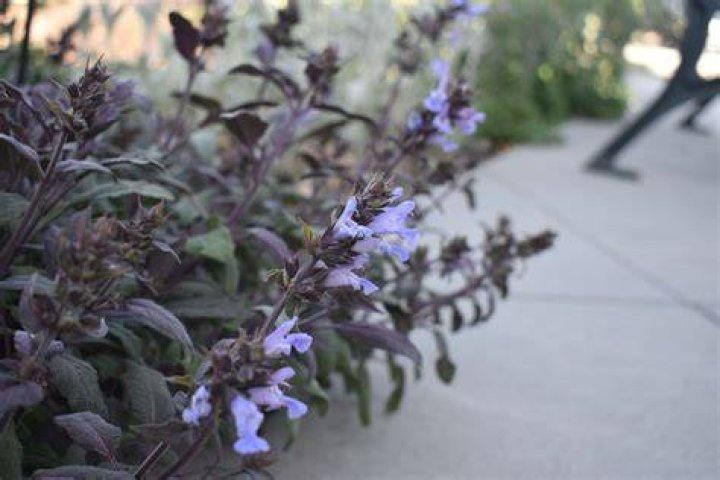
What Does Purple Sage look like?
 Andrew Adams
 .
Likewise, people ask, what Does Purple Sage mean?
Certain true sages, members of the genus Salvia in the mint family, are referred to as purple sage: Salvia dorrii, also called Ute tobacco sage, Dorr's sage, etc., which has showy purple flowers. It is a mild hallucinogen when smoked, and is used in Native American ceremonies and Native American herbal medicine.
Additionally, what does sage look like? Unlike more delicate herbs, sage can be added in the beginning of the cooking process. What does sage look like? Sage has light gray-green leaves that are soft and fuzzy to the touch.
Just so, how do you take care of Purple Sage?
Purple sage is a drought-tolerant plant that thrives in dry soil. Once established, the plant generally requires no supplemental irrigation; however, it benefits from an occasional watering during periods of hot, dry weather. Water deeply enough to saturate the roots and then don't water again until the soil is dry.
How do you grow purple sage indoors?
Sun: Plant sage in medium to full sun. If you are growing sage indoors, place your pot near a sunny window. Water: Sage is a fairly drought-tolerant herb, and even when the leaves look wilted, a little water perks the entire plant right up. Wait until the soil is dry to give it a thorough watering.
Related Question Answers
Is Purple Sage good for smudging?
Purple sage is used for purifying and clears out negative energy. Aromatic lavender works in conjunction with the sage to create harmony and positivity. Sweetgrass is used to bring in positive energy after the negativity is released and adds a wonderful vanilla-like scent.Are all Sage edible?
Not All Salvias Are Edible. A: There are hundreds of members of the salvia family but only a few are considered edible. The edible salvias are usually referred to as sage, like the Salvia officinalis you use to flavor roasted chicken and turkey.How do you dry Purple Sage?
Wash the leaves thoroughly in a colander and let the water drain out. Then, pat them dry with a cloth or paper napkin. You can either spread the leaves out on a ventilated surface, or tie them up and hang them for drying. If you want to tie the leaves, use a string or piece of floss to tie some branches together.Can you use common sage for smudging?
Not all herbs, and even some varieties of sage are best to burn when dried. Garden or common sage will do the trick, too. Other smudging plants to use include cedar, sweetgrass, and sagebrush. Various herbs and wildflowers make as wonderful additions to your smudge stick.What can I cook with sage?
Sage is known for the distinct taste it gives to classic holiday stuffings. But it also is a flavor powerhouse in bean dishes, tomato sauces, omelets, polenta, chicken risotto, pesto, and sage butter for pasta and trout.Should you cut back Purple Sage?
One of the benefits of purple sage is that it requires minimal care after planting. If you prefer, wait to prune the plant back until the first frost of the fall or winter. Trim any dead stems back to just above the soil.What is Purple Sage good for?
Highly aromatic, Purple Sage is the most effective medicinal variety of Sage but stands cold the least. It can be made into teas to aide in digestion, used as an anti inflammatory agent for insect bites and can relive chest colds and congestion.Is Purple Sage edible?
Purple Sage is a perennial herb that is commonly grown for its edible qualities, although it does have ornamental merits as well. The fragrant narrow purple leaves with curious grayish green undersides can be harvested at any time in the season. The leaves have a savory taste and a strong fragrance.Is Purple Sage perennial?
Purple sage (Salvia dorrii), also known as salvia, is a bushy perennial native to the desert regions of the western United States. Keep reading to learn more about growing purple sage plants and the care of purple sage in gardens.How do you transplant Purple Sage?
Moving Russian SageDig a hole 2 1/2 feet wide and as deep as the depth of the Russian sage's root ball, which is usually about 1 foot. Place the plant in the hole so that it's level and sitting at its original growing depth. You may need to add or remove soil at the base of the hole.How often should you water Salvias?
Careful watering is essential in getting salvia perennials off to a good start. Water thoroughly at least once a week to help new roots grow down deeply. Soil should be damp at about 1 inch below the soil surface.How many types of sage are there?
Either way, these six different types of sage vary in color and use, but all of them make a wonderful addition to any garden.- Garden Sage. This is the most common type of sage.
- Pineapple Sage.
- Russian Sage.
- Purple Sage.
- Golden Sage.
- Berggarten Sage.
How do you prune sage?
Cut out old, woody growth each spring as the first new stems and leaves begin to emerge. Remove up to one-half of the old stems completely by cutting them off at their base. Trim back the remaining stem 8 inches, or by about one-third their length.How often should sage be watered?
For the first few weeks, you'll probably need to water sage once or twice per week. The soil should be kept about as moist as a wrung-out sponge. Once the plant has developed a good root system, you can decrease watering to every week or two. Be careful not to overwater!What does burning sage do?
Burning sage is is a powerful ritualThe ritual of sage burning has its roots in Native American tradition. Today, people burn sage and other holy herbs to cleanse a space or environment of negative energy, to generate wisdom and clarity, and to promote healing.Is Sage a stimulant?
Sage is used as stimulant, antiseptic, antipasmodic and carminative. Sage is used as a stimulant tonic and has been used as antidiabetic herb. Sage is used to treat typhoid fever, kidney troubles, liver complaints, colds in the head and sore throat.Should you let sage flower?
Generally, these plants are grown for their edible foliage and many gardeners choose to pinch off the flowers of the plant. If you do let your plants bloom, cut back to below the start of the bloom stalks to encourage fresh growth.What can I do with a lot of sage?
12 Creative Ways to Preserve Sage- Sage Honey. Infuse honey with dried sage leaves to add flavor to hot or iced tea, sweeten baked goods, add to a citrus-y marinade, or serve on a cheese plate.
- Sage Butter.
- Dried Sage.
- Sage Salt.
- Sage Vinegar.
- Sage Maple Syrup.
- Sage Ice Cubes.
- Sage Bitters.