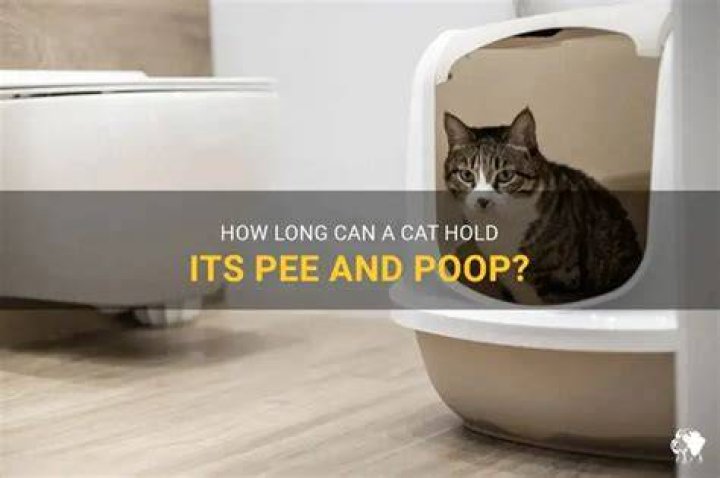
How long can a cat hold their poop and pee?
 Noah Mitchell
.
Also question is, how often do cats poop and pee?
The answer is it depends. Chuck Miller, D.V.M. and owner of Triangle Veterinarian Hospital in Durham, N.C., says that the average cat will urinate two to three times a day and poop once a day (or less, in some cases).
Subsequently, question is, how often should a cat urinate in 24 hours? It's essential to know your cat's normal daily urination and defecation habits. Some cats are perfectly fine urinating five times a day, while for others, that would signal a dramatic increase. Many cats use the litterbox only once or twice a day,and going four times would signal a problem.
Keeping this in view, how long can kittens hold their pee?
The rule is one hour for the age of the pup in months. So if you have a puppy that is 8 weeks old (or 2 months), you can only expect the puppy to be able to hold his or her urine for two hours.
How do you know when a cat needs to go to the bathroom?
Signs
- The cat shakes his paws excessively to remove the litter when he comes out of the box.
- The cat, wanting as little contact with the litter as possible, does not bury his waste after he goes to the bathroom.
- The cat balances on the side of the box to go to the bathroom because he doesn't want to step in the litter.
Related Question Answers
Do cats pick a favorite person?
Your cat's favorite person might simply be the human who plays with her the most. Remember that deep down, cats are animals. They're attracted to people they know will keep them safe and well-cared for. At the end of the day, some cats choose favorites based on totally arbitrary criteria, like who has the best smell.How often should you change kitty litter?
Twice a week is a general guideline for replacing clay litter, but depending on your circumstances, you may need to replace it every other day or only once a week. If you clean the litter box daily, you might only need to change clumping litter every two to three weeks.Why does my cat's poop stink so bad?
The cause for foul smelling stools in cats or humans can be very similar. It can be the food eaten, the bacteria in the colon1, and on occasion serious health problems. Additionally diarrhea and the presence of excess gas can cause bad odors. Many feline disorders are accompanied by diarrhea and foul smelling stools.Can you flush cat poop?
Even though it may seem like a good idea, you should not be flushing your cat's litter or feces down the toilet. It can cause havoc on your plumbing, clog pipes, and damage your septic system. Cat waste can contain a nasty parasite called Toxoplasma which can cause some serious health problems to humans.How many times do cats poop?
General Rule of Thumb: All other things being equal though, the general "rule of thumb" is that a cat should pass a bowel movement at least once daily. Furthermore, that movement should be formed, but not too hard, a normal brown color, and they should pass it without difficulty or discomfort.How do you clean a cat litter tray?
Litter box 101- Scoop out droppings and clumps at least once a day.
- Put the waste into a sealed bag and dispose of it outdoors.
- Wash the litter scoop and store it in a plastic bag.
- Clean the edge of the litter box and the box cover with soap and water.
How long can cat go without pooping?
Cats that stop eating for any reason will obviously have less in their digestive tracts, so they may go less often. But if four to five days go by without evidence in the litter box, it's time to be concerned.Do cats fart?
Smell a kitten's butt sometime and you'll walk away convinced that cats fart. The discretion, or lack of audible farts, is probably due to the fact that cats don't gulp their food like dogs do, leading to less air accumulating in their digestive tract. So, yes, cats do fart.How often do 12 week old kittens pee?
General guidelines are: Kittens need to be stimulated until about 3 weeks of age. Kittens should be stimulated before and after each feeding. Kitten should urinate every time and defecate at least once daily.How often do 3 month old kittens poop?
3. Kittens should urinate after each feeding and have a bowel movement one to four times a day. 4. When they are between 3 and 4 weeks of age, kittens can be introduced to the litter box.Why is my kitten not peeing?
Feline Lower Urinary Tract Disease (FLUTD) When you see that your cat can't pee or is straining to urinate, you know he or she must be uncomfortable. This straining is usually due to cystitis, also known as inflammation of the bladder. If you have ever been diagnosed with cystitis, you can sympathize with your cat.How long can a cat go without peeing before it is dangerous?
In advanced cases, where the urine flow has been stopped for more than 24 hours, they can become systemically ill from retained toxins and start vomiting, or become very weak and lethargic. Death usually happens within 48 hours, and it's not a pleasant way to go.How do you know when a cat wants to pee?
Signs that Your Cat Needs to See a Veterinarian- Frequent attempts to pee, which often produces little or no pee.
- Blood-tinged pee.
- Crying out in pain, or other signs of discomfort, when attempting to pee.
- Becoming progressively more lethargic.
- Excessive licking of the genital area.
What if my kitten isn't pooping?
Kittens may not defecate every day, so the lack of feces in the litter box one day may not raise any red flags. But if your kitten has not produced any stool in a few days, you should start monitoring it for constipation, which is difficulty defecating, or obstipation, which is the lack of any feces being produced.Why is my kitten not peeing in the litter box?
Urinary tract inflammation, diabetes, and kidney disease are just three of the common health issues that can make cats urinate outside of the litter box. If your cat is given a clean bill of health, your veterinarian can then help you move on to addressing environmental or behavioral issues that may be playing a role.What are the signs of kidney failure in cats?
11 Signs Your Cat's Kidneys May Be Failing- Frequent urinating.
- Drinking a lot of water.
- Bacterial infections of the bladder and kidney.
- Weight loss and decreased appetite.
- Vomiting, diarrhea, and bloody or cloudy urine.
- Mouth ulcers, especially on the gums and tongue.
- Bad breath with an ammonia-like odor.