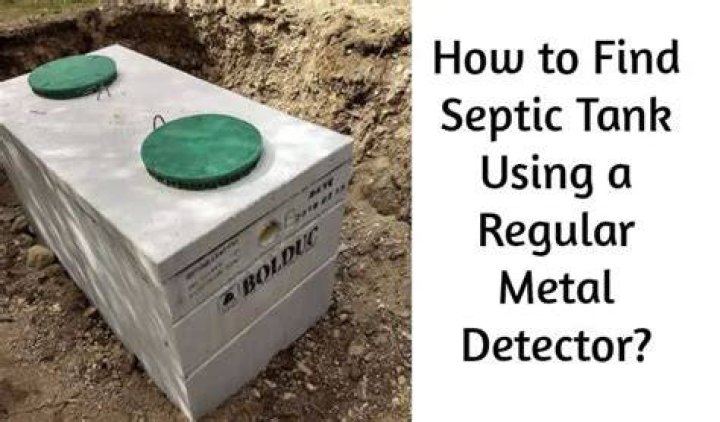
How do you find a metal detector with a septic tank?
 Robert King
 .
Hereof, where is the access port on a septic tank?
In most cases, septic tank components including the lid, are buried between 4 inches and 4 feet underground. You can use a metal probe to locate its edges and mark the perimeter. If you do not find the lid by probing, shallow excavation with a shovel along the tank's perimeter should reveal the lid.
Secondly, how much does it cost to have a septic tank put in? Septic Tank System Cost. A new septic tank system costs $3,918 to install on average, with prices ranging from $1,500 to upward of $5,000. Most homeowners spend between $3,280 and $5,040 for a 1,250-gallon system that supports 3 or 4 bedrooms.
Regarding this, how deep is a septic tank lid?
In most cases, all components of the septic tank including the lid are buried between 4 inches and 4 feet underground. Unless the septic tank has special risers that position the lid at ground level, you'll have to dig for it.
How do you maintain a septic tank?
Things you should do to maintain your septic system
- Regularly inspect and maintain your septic system.
- Pump your septic tank every 3-5 years.
- Be water-wise.
- Direct water from land and roof drains away from the drainfield.
- Landscape with love.
- Keep septic tank lids easily accessible.
Related Question Answers
Can I cover my septic tank lid with dirt?
However, a pipe or lid in the middle of a lawn may seem unsightly to some homeowners. A common solution to this problem is to situate the lid of the riser a few inches below the surface of the lawn. This way, grass and a thin layer of soil or another landscaping surface can cover the lid.What is a septic tank made of?
The septic tank is a watertight box, usually made of concrete or fiberglass, with an inlet and outlet pipe. Wastewater flows from the home to the septic tank through the sewer pipe. The septic tank treats the wastewater naturally by holding it in the tank long enough for solids and liquids to separate.How far is the leach field from the septic tank?
* Your septic system site plan is typically drawn right on top of your property survey showing the septic tank 'setbacks' with tank 5-10 feet from the house, the leach field at least 20 feet from the house, at least 100 feet away from wells and streams, 25 feet away from dry gulches, and 10 feet away from the propertyWhat does a septic drain field look like?
The drain field typically consists of an arrangement of trenches containing perforated pipes and porous material (often gravel) covered by a layer of soil to prevent animals (and surface runoff) from reaching the wastewater distributed within those trenches.How often should a 1500 gallon septic tank be pumped?
There are ways to help estimate about when you should have your tank pumped. As an example: an average four-bedroom house may have a 1,200 to 1,500 gallon tank and with a family of four, you should expect to have the tank pumped every 3 to 5 years with typical use.Can you drive over a septic drain field?
Can I drive or park over my leach field? No. It is not recommended, but limited driving of light vehicles should not harm a properly installed leach field. Under wet conditions, however, any heavy packing of the earth over the distribution lines will have a negative impact on effectiveness.Can you use bleach with a septic tank?
A small infusion of bleach from a load of laundry will not affect a few thousand gallons of water and bacteria in your septic tank. They release bleach and other chemicals with every flush, and are not safe for homes on septic. Never pour raw cleaners, bleach, or household chemicals down the drain.Do you really need to pump your septic tank?
Septic tanks need to be pumped periodically in order to get rid of solid waste deposits that form on the bottom and top of your tank and put life-shortening stress on your entire septic system. Septic tank maintenance should become a part of your regular home maintenance.Can a septic tank be under the house?
FAQ Answer: The septic tank is usually buried near your house and connected by a sewer pipe to your indoor plumbing. Most newer septic tanks have access lids that are visible at or just above ground level.Do all septic tanks have filters?
First, not all septic tanks have a filter, especially the older septic tanks. Now many government agencies require or recommend a filter when a septic tank is installed. Cleaning a septic tank filter is different than pumping out a septic tank and cleaning it.How do I clean my septic tank naturally?
Using baking soda is very easy. You can mix about a 1/4 cup of baking soda with 1/2 cup of vinegar and 2 tablespoons lemon to make your own natural cleaning agent. The baking soda will fizz up to help get the dirt and grime in your tub and drains. It's a great cleaner and your septic system will thank you!How often should a septic tank be pumped?
Inspect and Pump FrequentlyHousehold septic tanks are typically pumped every three to five years. Alternative systems with electrical float switches, pumps, or mechanical components should be inspected more often, generally once a year.What size septic tank do I have?
The correct size of the septic tank depends mostly on the square footage of the house and the number of people living there. Most residential septic tanks range in size from 750 gallons to 1,250 gallons. An average 3-bedroom home, less than 2500 square feet will probably require a 1000 gallon tank.How deep is a 1000 gallon septic tank?
| Steel Septic Tank Typical Dimensions | ||
|---|---|---|
| Steel Septic Tank Size (Gallons Capacity) | Tank Length (Inches) | Tank Depth (Height) (Inches) |
| 750 | 58 | 73 |
| 1000 | 58 | 96 |
| 1250 | 58 | 120 |